Seasons of Writing with AI – Chapter 4
Finding Motivation
Alright, let’s talk about the elephant in the room: the blank page, the blinking cursor, and that sinking feeling when you sit down to write, and suddenly your brain decides it wants to reorganize your spice cabinet or deep clean the refrigerator.
We’ve all been there. And guess what? Adding AI to your process doesn’t magically make motivation issues vanish. But—and this is a big but—it can provide some clever workarounds for those days when your muse has gone fishing.
Techniques for Getting Started When Facing the Blank Page
One of the funniest things about writing with AI is that it actually creates more opportunities to procrastinate. Now you can spend hours tweaking prompts instead of, you know, actually writing your story. But I’ve found a few techniques that can help break through that initial resistance.
Change Your Environment (and Your Device)
Sometimes just changing your normal routine can help get the creative juices flowing or get you out of a rut. This doesn’t mean you need to book a cabin in the woods (though if that’s an option, by all means!). It could be as simple as taking your AI writing tools mobile.
Both Anthropic and OpenAI have mobile apps, and Gemini is built into some Android phones. Take your device to another room, another house, or your favorite coffee shop for a change of pace. Nothing inspires the creative process quite like the smell of pumpkin spice and the ambient noise of milk being steamed in the background.
I’ve found ChatGPT’s advanced voice mode particularly useful here. It really feels like having a conversation with a writing partner. You can chat with ChatGPT while on a walk through the neighborhood or even just sitting next to a nice window with your beverage of choice. Brainstorm, plot, or dictate sections of your next scene. Then, whenever you’re back at your computer, the voice chat you had will be waiting in text form, ready to be copied into your manuscript or refined further.
Just Start Talking
But you’re probably thinking, “I can’t even get started talking to the AI. My brain is empty!”
I get it. Some writers swear by the “write for 15 minutes without stopping” technique. But if you’re like me, that can feel like absolute torture some days. So here’s an even more stripped-down version: just talk for 15 minutes. Don’t judge your ideas. They don’t even have to make sense! Just start talking about your story and don’t stop until the timer goes off.
You can use a freemium product like Otter or Notta to transcribe your thoughts if you don’t own something like Dragon dictation. Even Apple and Windows 365 have built-in transcription functions these days.
The transcription will probably be a hot mess. That’s perfectly fine! The goal isn’t a polished document; it’s just getting something out of your head and onto the page. Then you can add it to one of the AI models with a larger context window (like GPT-4o or Claude) with a simple prompt:
Please take the transcription of this brainstorming session for this [GENRE] and organize the thoughts into a narrative form. Ignore irrelevant information or anything I later disregarded. Format this as if I took all these thoughts and used them to create a well-thought-out presentation about my book idea to a group of editors. Only use information and details provided in the notes without adding additional information.
Voila! You’ve now got a structured outline or document that can serve as your jumping-off point. And the best part? You didn’t have to stare at a blank page while creating it.
Maintaining Your Creative Drive
Motivation isn’t just about getting started—it’s also about keeping going when the initial excitement fades or when you hit challenging sections of your project.
Coming at Your Writing Sideways
Sometimes the direct approach just doesn’t work. During a particularly distracting period (like, say, an election cycle), we found that many writers in our Academy were struggling to focus on their main projects.
Instead of forcing ourselves to buckle down, we gave ourselves permission to write something fun and unrelated. In other words, we came at our writing sideways. Some wrote flash fiction. Others tried a completely different genre. The goal wasn’t necessarily to produce usable content but to keep the writing muscles active.
Interestingly, many found that after an hour of “fun writing,” they were able to transition back to their main projects with renewed energy. The AI had helped them warm up, and they could redirect that momentum where it was actually needed.
Remember Your “Why”
In a world of AI tools, token costs, and ever-evolving technology, it’s easy to lose sight of why you started writing in the first place. I asked one of the AI models to help me reflect on my own purpose as a writer, and its response was surprisingly insightful:
“Reconnect with your passion. What made you fall in love with storytelling? What characters or worlds are you burning to bring to life? When the technical aspects of AI writing become overwhelming, return to the pure joy that made you want to write in the first place.”
This isn’t just fluffy advice—it’s genuinely helpful. When you’re struggling with motivation, take a moment to articulate your “why.” Is it to entertain readers? To explore complex themes? To simply see your name on a book cover? There’s no wrong answer here, but clarifying your purpose can reignite your drive when it’s waning.
The Prioritization Strategy
One of the biggest motivation killers is feeling overwhelmed. With AI, this is particularly common because there’s always a new model, a new technique, or a new tool to learn.
As Homer Simpson wisely said about alcohol, AI can be “the cause of, and solution to, all of life’s problems.” It can create overwhelm with its constant evolution, but it can also help you manage that very same overwhelm.
Try this prompt with your favorite AI:
I’m an author running my own publishing business. I also have [list your other responsibilities]. I feel overwhelmed, and my motivation is suffering. Can you help me create a prioritization matrix for my tasks and goals, focusing on what will give me the most creative satisfaction and business success with the least amount of stress?
The AI can help you sort your tasks into four categories:
- Important & Urgent: Do these tasks immediately.
- Important & Not Urgent: Schedule these for later. This is where most of your long-term goals, like learning and creative fulfillment, fall.
- Urgent & Not Important: Delegate or minimize these. Think emails, some meetings, etc.
- Not Urgent & Not Important: Eliminate these if possible.
This simple framework can help clear the mental clutter that’s sapping your motivation. And having an AI help you sort through it all can make the process feel less overwhelming.
When All Else Fails
There will be days when none of these techniques work. Days when even your AI assistant seems to mock you with its cheerful readiness to help. On those days, be gentle with yourself.
Try setting a ridiculously small goal. Don’t aim to write a chapter; aim to write a sentence. Don’t try to outline an entire novel; just identify one character trait for your protagonist.
And remember, feeding your creative well is part of the process too. Sometimes the most productive thing you can do is give yourself permission to step away from the keyboard, go for a walk, read a book in your genre, or watch a movie that inspires you.
AI is a tool, not a replacement for your creative spirit. Nurture that spirit, and the words will come—sometimes with AI’s help, sometimes despite it, but always, ultimately, because of you.
In our next chapter, we’ll dive into developing your AI writing style, helping you identify which of the four author-AI interaction types best matches your creative process. Until then, may your motivation be high and your token costs low!
You have been reading Seasons of Writing with AI...
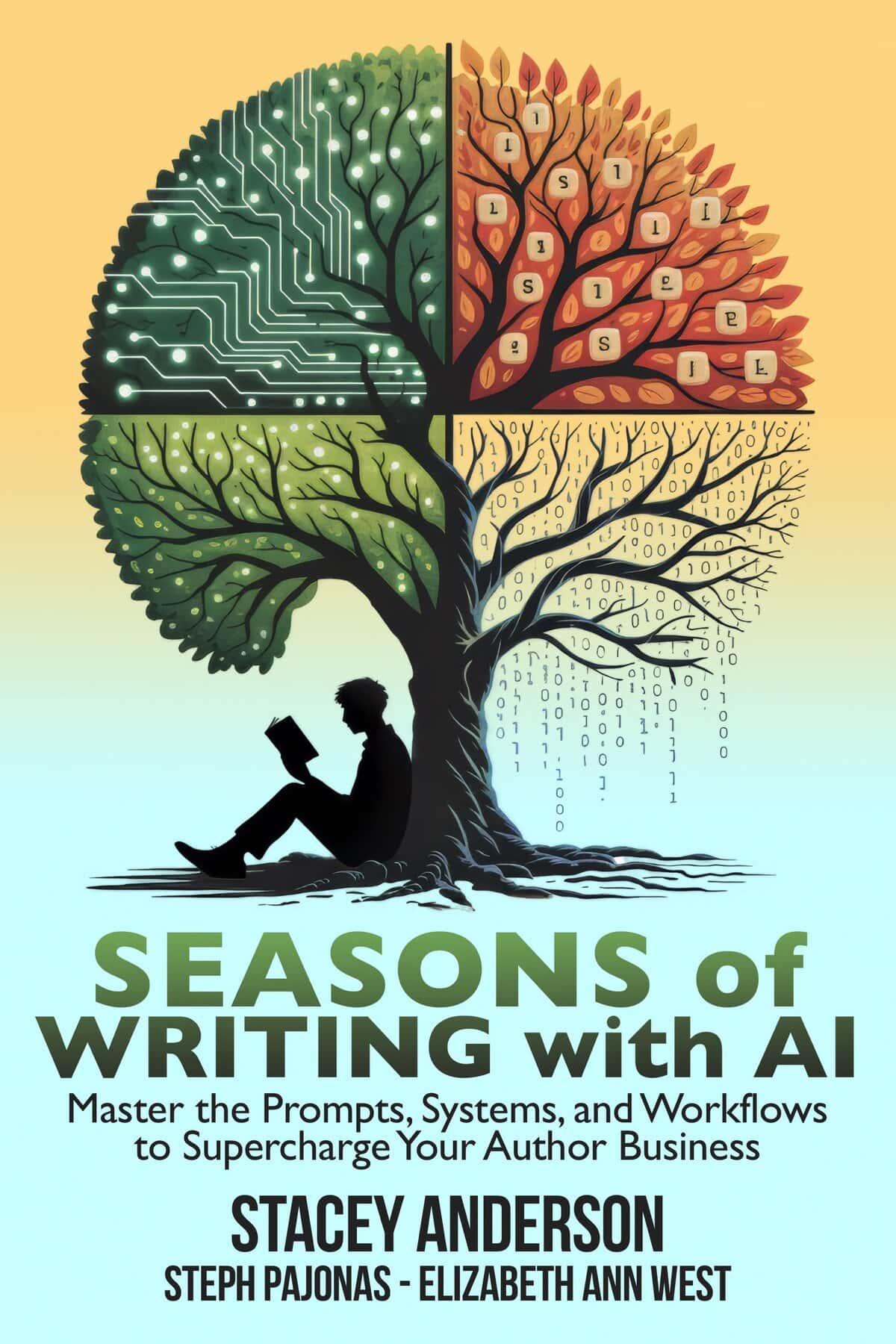
So, you’ve started using AI, but it’s not the magic bullet you hoped for.
The output is generic, the process is clunky, and you’re spending more time fixing text than writing it.
Sound familiar? You’re not alone.
Seasons of Writing with AI is your practical field guide to bridging the gap between AI’s promise and its reality. This isn’t another beginner’s guide or philosophical debate—it’s a collection of battle-tested strategies from 18 months of real-world use by publishing authors who are thriving with AI.
Inside, you’ll discover:
- Your Personal AI Style: Find out if you’re a Gardener, Weaver, Baker, or Architect, and build a workflow that actually works for you
- Advanced Prompting Systems: Master Writing Briefs and Megaprompts to generate consistent, high-quality prose with minimal editing
- How to Speak AI’s Language: Overcome frustrating miscommunications and get the specific results you want, every time
- Beyond the Manuscript: Transform your marketing, create stunning visuals, and even produce audiobooks
Stop wrestling with your AI and start a true creative partnership. Your journey from frustration to mastery begins here.
