Seasons of Writing with AI – Chapter 3
Starting Small
There’s something magical about getting your hands dirty when you’re starting something new. The tactile experience of digging into the soil, feeling the texture, and planting those first seeds is how gardens begin. The same is true when learning to write with AI—you need to get your hands dirty with small, manageable projects before tackling that epic fantasy series or psychological thriller trilogy.
In this chapter, we’ll explore why starting small is not just wise but essential when incorporating AI into your writing process. We’ll look at practical ways to build confidence through smaller projects and how to lay the groundwork for larger successes.
Why Novellas and Short Stories Make Ideal First Projects
When many writers first discover AI, they’re eager to jump straight into using it for their magnum opus—that 120,000-word historical romance or sprawling space opera they’ve been planning for years. I understand the impulse! But this approach often leads to frustration, overwhelm, and sometimes abandonment of AI tools altogether.
Here’s why I consistently recommend starting with a novella or short story:
Manageable Scope: A novella (typically 20,000-40,000 words) or short story (under 10,000 words) allows you to go through the entire process—from concept to completion—in a reasonable timeframe. You can experience the full cycle of working with AI without getting stuck in endless revision loops or complex plot management.
Lower Stakes: Let’s be honest—your first attempts at working with AI will involve some trial and error. Would you rather work those kinks out on your passion project or on a low-pressure side project? Starting small gives you room to experiment, make mistakes, and learn without jeopardizing a project you’re deeply invested in.
Faster Feedback Loop: With shorter projects, you can quickly see what’s working and what isn’t. This accelerated feedback loop is invaluable for learning. You might need to adjust your prompting technique, try a different AI model, or refine your editing approach—all things easier to identify when you can see the complete project in a shorter timeframe.
Confidence Building: There’s nothing like the satisfaction of completing a project. Finishing a short story or novella with AI assistance provides that confidence boost that makes you eager to take on bigger challenges.
This is a good time to mention that I’m not suggesting you need to publish these early experiments (though you certainly can). They can be purely for your own learning process—think of them as your AI writing laboratory.
Breaking Down the Process
So you’ve decided to start with a novella. Great! But how exactly do you approach this? Let’s break down the process into manageable pieces.
When you’re first starting to work with AI, it’s best to begin with a smaller work, such as a short story or novella, to get a feel for the process. Then, walk through all the elements you’ll need to build the story.
The key is to find a systematic process—one that creates and then gives the AI all the components it needs to construct and write a story.
A pro tip is to ask the AI what it needs to write a story.
This is a shortcut to make sure you have all the elements planned out to keep the AI on track (remember, if it doesn’t have a piece of information, it will often hallucinate).
When you ask the AI, it will tell you several common elements: characters, settings, the events of the story (plot), tone, dialogue, etc.
You then have your roadmap! As a human, you may intuitively know some things, such as the tone or mood a scene should have. But you need to write this out explicitly for an LLM in order to get the results you’re aiming for.
Let’s look at a systematic approach:
1. Start Where You Normally Would
The simplest way is to start at the same place you would without AI. When you begin a new story, where do you start? An interesting character? A cool premise or story idea? A killer plot twist?
Start at the same place, but you’ll often have to be slower and more explicit with an AI. Where a human would assume that when you create a character it should have a flaw, you might have to directly ask the AI for this piece of information with clear, concise, and direct instructions.
2. Brainstorm Core Elements
Once you have your initial idea, use the AI to help you brainstorm and develop the core elements of your story:
Characters: Develop your protagonist, antagonist, and supporting characters. Ask the AI to help you create detailed character profiles, including backgrounds, motivations, flaws, and arcs.
Setting: Establish your story’s world, whether it’s contemporary, historical, or entirely fictional. The AI can help generate sensory details, cultural elements, and unique aspects of your setting.
Plot: Outline the major events and turning points in your story. For a novella, you might aim for 10-15 scenes.
Theme: Identify the central message or idea you want to explore in your story.
Here’s an example of how you might prompt the AI for character development:
“I’m writing a mystery novella set in a coastal Maine town. My protagonist is a retired detective named Sarah who now runs a bookshop. Please help me develop her character by providing: 1) Three formative experiences from her past that influence her detective skills, 2) Two personal flaws that might hinder her investigation, 3) A unique habit or quirk that makes her memorable, and 4) Her initial motivation for investigating the murder of a local fisherman.”
This prompt is specific enough to give you useful information but open enough to allow for creativity.
3. Create a Scene-by-Scene Outline
For a novella, having a clear roadmap is especially helpful when working with AI. Create a scene-by-scene outline that includes:
- The purpose of each scene
- Which characters are present
- The setting details
- The conflict or tension
- How the scene advances the plot
- The emotional beat or character development
You can ask the AI to help you develop this outline based on your core elements. For example:
“Based on the character and plot information we’ve developed so far, please create a 15-scene outline for my mystery novella. For each scene, include: 1) The setting, 2) Characters present, 3) The main conflict or purpose, 4) How it advances the overall mystery, and 5) Any important emotional moments for Sarah.”
4. Write Manageable Chunks
With your outline in hand, you can now start writing the actual prose. Rather than trying to generate the entire novella at once, work scene by scene. This approach gives you more control and allows you to make adjustments as needed.
For each scene, you might use a prompt like:
“Using the outline we’ve created, please write Scene 3 where Sarah discovers a mysterious notebook in the victim’s boat. Include sensory details of the harbor at sunset, Sarah’s internal thoughts about the case, and end with a revelation that changes her understanding of the victim. Write this in third-person past tense, maintaining an atmospheric tone similar to the previous scenes already written in the story.”
Building Confidence Through Completion
One of the most powerful aspects of starting small is the confidence that comes from completing a project. There’s a psychological benefit to taking a story from concept to “The End” that shouldn’t be underestimated.
Many writers get stuck in perpetual revision mode or jump from project to project without finishing. Working on a novella with AI helps break this cycle because:
The Scope is Defined: With a clear beginning, middle, and end already mapped out, you’re less likely to get lost in endless expansions or tangents.
You Can See the Entire Arc: Unlike a novel where you might lose sight of the overall structure, a novella allows you to hold the entire story in your mind, making it easier to maintain consistency.
Completion Builds Momentum: Finishing one project creates positive momentum that carries forward to your next project. Success breeds success.
You Develop a Process: By working through a complete project, you establish a repeatable process that you can refine and scale up for larger works.
I’ve seen many authors in the FFA who started with a simple 25,000-word novella using AI and, within months, were confidently producing full-length novels with the skills they developed.
Practical Exercises to Get Started
Let’s talk about some specific exercises you can use to begin your AI writing journey:
Flash Fiction Challenge
Start with something ultra-short: a 500-1,000 word flash fiction piece. This can be completed in a single session and gives you immediate practice with the entire workflow.
- Ask the AI for three unusual writing prompts in your preferred genre.
- Choose one and ask the AI to help you brainstorm the core elements.
- Write the flash fiction piece either collaboratively with the AI or using the AI’s suggestions as inspiration.
- Edit and refine the piece until you’re satisfied.
Character Interview
Creating compelling characters is fundamental to good fiction. Try this exercise:
- Come up with a basic character concept.
- Ask the AI to interview this character, posing questions about their past, motivations, fears, and desires.
- Respond as the character, letting the AI’s questions guide you to deeper insights.
- Use the interview to create a character profile for a future story.
Setting Exploration
Settings can make or break a story. Practice developing rich, immersive settings:
- Choose a location type (haunted house, alien marketplace, medieval village).
- Ask the AI to help you explore the sensory details, history, and unique aspects of this setting.
- Together, write a 500-word descriptive passage introducing readers to this world.
- Identify 2-3 ways this setting could influence a plot or create conflict.
The Mad Libs Approach
Anyone remember the old game Mad Libs? One person had a pad and would ask the other for a noun, then an adjective, and so on. At the end, you would read the new story with the randomly inserted, hilarious words. Try playing the same game with ChatGPT or Claude. Here’s a prompt I used:
“I want to play a version of the old game Mad Libs. Please take an old story or fable and remove some of the nouns, verbs, adjectives, adverbs, etc. Then ask me to supply one of these parts of speech, one at a time, before telling me the story. Then replace my answers with what was originally in the story. For example, if the original story was ‘The cow jumped over the moon,’ you would ask me for a location. I would say ‘Cincinnati.’ Then you would reply with the new story, ‘The cow jumped over Cincinnati.’ We will go one line at a time, back and forth, until we have completed the whole story. Do you understand?”
And here is the story I ended up with:
“Once upon a time, a shoebox challenged a glamorous hare to a race. The hare, confident in his speed, began expelling down the path catastrophically. Meanwhile, the tortoise, carrying his trusty calligraphy pen, moved at a sinister pace but never faked.
The audience watched as the hare decided to speak off for a bit, feeling certain of victory. But when he awoke, he saw the purple tortoise near the finish line! With a sudden burst, the hare dashed forward, but it was too late. The tortoise crossed first, triumphantly raising his tea cup in celebration.
As he was singing in his slow, melancholy way, the hare learned an important lesson: ‘Slow and steady wins the knife.’”
This playful approach can generate unexpected ideas that might spark a short story or flash fiction piece. It’s a perfect low-pressure way to start experimenting with AI.
Transform Your Current Scene
Another approach is to take a scene from a current work in progress and give it to an AI. Then ask it to rewrite the dialogue so the characters can only communicate through questions. Or they can only speak to one another through metaphors about storms and weather, while trying to convey the same information.
Another idea is to ask the AI to create a random location generator for an unusual setting. After it has created the setting, give the AI your scene and ask it to rewrite the scene so it is set in this world instead.
These exercises are perfect for short pieces and can help you get comfortable with how AI transforms and adapts existing content. They’re also just plain fun—and keeping the joy in writing is essential!
Song Lyrics as Inspiration
One of my favorite story sparks is to take some random song lyrics from one of my favorite songs and feed them into an AI Art generator. Ideogram, Midjourney, Leonardo, and DALL-E are some of my favorites, and last I checked, they all had some form of free image creation available. Leonardo has the most generous free plan, and DALL-E can be used through Bing (https://www.bing.com/images/create). Other programs, such as Canva, also have image generation built in.
At the time I was playing around with this, the number one song on Billboard’s Music Chart was “Love Somebody” by Morgan Wallen. I chose one line of the song as my prompt: “And I’d be lucky if I ever find somethin’ more than just a crazy night.”
That single line of song lyric was my prompt to create an image. One image was some kind of evil, depressed clown.
I then uploaded the image to ChatGPT (you need a paid plan to upload images to ChatGPT, but you can do it in Claude with just the free plan). First, I asked for a writing prompt based on the image, then I asked ChatGPT to write a piece of flash fiction based on that writing prompt.
The prompts and stories it wrote were a lot of fun, and one ended with this haunting line:
“Somewhere in the distance, a child laughed—a sound both foreign and achingly familiar. And then, everything went dark.”
This technique creates a multi-layered creative process: lyrics inspire an image, which inspires a prompt, which inspires a short story. It’s perfect for breaking creative blocks and generating unique ideas for flash fiction or short stories.
Finding Your Process
As you work on these smaller projects, you’ll naturally begin to discover which aspects of the AI collaboration work best for you. Some writers find they prefer using AI primarily for brainstorming and outlining, while others leverage it more heavily in the drafting phase. Some may use it primarily for dialogue generation, while others find it most valuable for descriptive passages.
There’s no single “right way” to work with AI. The beauty of starting with smaller projects is that you can experiment with different approaches without committing to a lengthy process that might not suit your style.
Pay attention to:
- Which types of prompts give you the most useful results
- What aspects of writing the AI seems to excel at for your genre
- Where you find yourself wanting to take over manually
- How much editing the AI-generated content typically requires
- Which parts of the process feel most enjoyable and energizing
These insights will help you develop a personalized AI writing workflow that you can later scale up for larger projects.
Looking Ahead
As we continue our seasonal journey, these small projects serve as the seedlings of your AI writing garden. Some may grow into beautiful flowering plants, while others might be learning experiences that enrich the soil for future growth.
The key is to approach these early efforts with curiosity and patience. Remember that you’re not just learning to use a tool—you’re developing a collaborative relationship with AI that will evolve over time.
In our next chapter, we’ll explore techniques for finding motivation and maintaining creative momentum as you integrate AI into your writing process. We’ll look at strategies for overcoming resistance, dealing with the blank page, and using AI as a brainstorming partner.
For now, I encourage you to choose one of the small exercises we’ve discussed and give it a try. Remember, there’s no pressure to create a masterpiece—the goal is simply to get your hands dirty and start planting those first seeds.
You have been reading Seasons of Writing with AI...
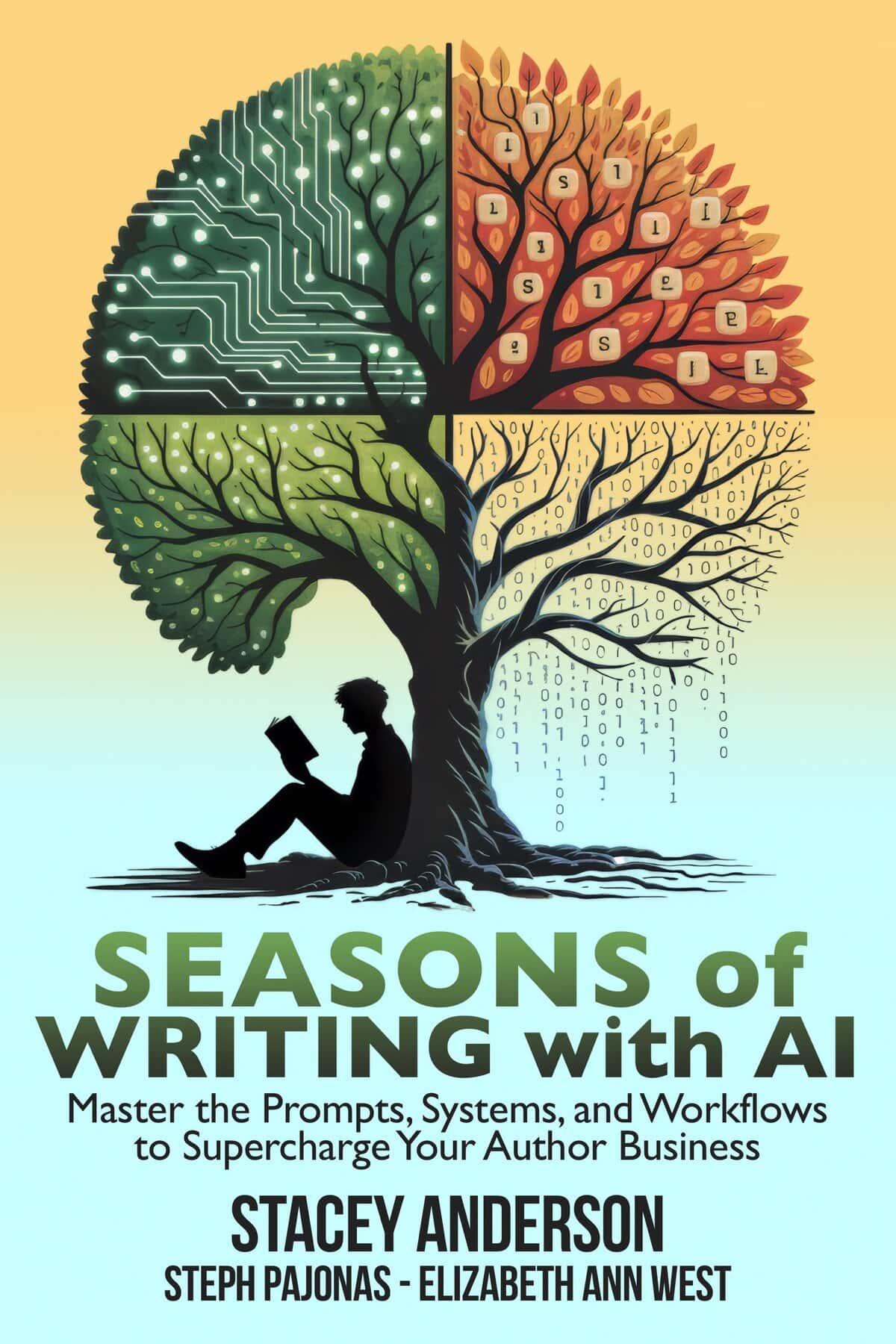
So, you’ve started using AI, but it’s not the magic bullet you hoped for.
The output is generic, the process is clunky, and you’re spending more time fixing text than writing it.
Sound familiar? You’re not alone.
Seasons of Writing with AI is your practical field guide to bridging the gap between AI’s promise and its reality. This isn’t another beginner’s guide or philosophical debate—it’s a collection of battle-tested strategies from 18 months of real-world use by publishing authors who are thriving with AI.
Inside, you’ll discover:
- Your Personal AI Style: Find out if you’re a Gardener, Weaver, Baker, or Architect, and build a workflow that actually works for you
- Advanced Prompting Systems: Master Writing Briefs and Megaprompts to generate consistent, high-quality prose with minimal editing
- How to Speak AI’s Language: Overcome frustrating miscommunications and get the specific results you want, every time
- Beyond the Manuscript: Transform your marketing, create stunning visuals, and even produce audiobooks
Stop wrestling with your AI and start a true creative partnership. Your journey from frustration to mastery begins here.
