Seasons of Writing with AI – Chapter 2
Basic Prompting Techniques
In the spring of your AI writing journey, you need to plant the seeds that will grow into your creative garden. And just like any good gardener knows, the quality of those seeds makes all the difference.
In this chapter, we’re going to dig into what makes an effective prompt—your primary tool for communicating with AI. Think of prompts as the language you use to collaborate with your AI writing partner. The better you speak this language, the more fruitful your partnership will be.
Breaking Down the Task
If I walked up to you on the street and out of nowhere blurted out, “Tell me how to write a book!” how would you answer that question? Without any context, that is a big and difficult question to answer. With such a generic concept, you’d probably give an equally generic answer, like, “Just put your butt in the chair and see where the story takes you.” That answer won’t help me if my underlying question was really about character archetypes or how to use Scrivener.
This is the basis of many “bad” or generic answers the AI gives. As a machine model, it doesn’t understand context or meaning the way a human would intuitively understand.
If you’d like to see this in action, watch a YouTube video on “Exact Challenge Instructions,” specifically about how to make a peanut butter and jelly sandwich.
The method these children went through to get their father to make a peanut butter and jelly sandwich is similar to what you can do with an AI. Ask the AI to make a peanut butter and jelly sandwich. When it tears open the package of bread from the middle instead of using the twist tie, back up and explain that step of the process to the AI. It probably won’t need that level of detail, but when the AI isn’t giving you what you want, the best way to start troubleshooting is to break the prompt or task into smaller segments.
I’ve seen too many writers get frustrated when they ask an AI to “write me a cozy mystery novel” or “create a romantic subplot,” only to receive generic, unsatisfying results. These requests are simply too broad. They’re the equivalent of walking into a restaurant and saying “feed me” without specifying what cuisine you want or any dietary restrictions you might have.
Instead, we need to break down our requests into more manageable pieces. Let’s look at how this works in practice.
The What, Why, How Method
Once you have a smaller, more manageable idea for the AI, we want to create a prompt using the ‘What, Why, How’ method.
WHAT you want (a story outline, a caption for an Instagram post, ideas for a blog post, a character description). Breaking the task into smaller chunks is all about telling the AI WHAT you want.
HOW you want the AI to give you the information. If you ask for a scene for a psychological thriller, it may reply with a screenplay. If you ask it for a scene for a novel, it may only give you 300 words (New Moon from the Twilight series had 4 “scenes” that were 1 word long, the names of the months). Most AIs can’t write to a specific word count, but they will know you want a short scene if you ask for 300 words and will make their response longer if you ask for 2,500.
WHY you want this information. In other words, the goal of this output. If you’re asking an AI to write a short summary for a resume versus a summary for an ad caption, it will give you different results. The AI will provide a better, more tailored result if you let it know how you plan to use the information.
Let’s try an example.
I gave ChatGPT 4o a prompt: “Please write a hook for my blurb.” I then provided it with the blurb from Pride and Prejudice (Penguin Classics version). Here’s what it gave me back:
“In the picturesque English countryside of early 19th century Hertfordshire, the Bennet family faces a delicate predicament: with five unmarried daughters and an estate entailed away from the female line, Mrs. Bennet is desperate to see her daughters well-matched. When the wealthy and eligible bachelor Mr. Bingley arrives in the neighborhood along with his haughty friend Mr. Darcy, a complex dance of pride, prejudice, and unexpected affection begins that will challenge social conventions and transform the lives of all involved.”
This answer is long and not very snappy. In other words, not at all what I wanted in a hook.
So let’s combine these two ideas. I’m going to break the task down and explain exactly what I’m looking for in a hook. Then I’ll use the What, How, Why method to create my prompt.
Here is the prompt I created:
“Please give me a hook using my Amazon product description for my Regency era romance novel, emphasizing the enemies-to-lovers trope between Elizabeth and Mr. Darcy (WHAT I WANT). Please make the hook 2 short, punchy statements followed by an intriguing question (HOW I WANT IT). The goal of this hook is to increase sales and to get potential readers to read the rest of the blurb and then buy the book (WHY I WANT IT).”
This time, here is the response I received:
“Pride blinds. Prejudice divides. When two stubborn hearts collide in Regency England, will love finally overcome their first impressions?”
This is much closer to what I’m looking for.
Now let’s look at another example with a different purpose. Say you’re working on world-building for a fantasy novel, and you need to create a unique magic system. You might structure your prompt like this:
“I’m developing a magic system for a high fantasy novel where the magic comes from consuming different types of metals (WHAT). Please provide 5 different metals with their corresponding magical abilities, limitations, and potential side effects. For each metal, include at least one way it could be used in combat and one non-combat application (HOW). This will be used to create consistent rules for my magic system throughout a planned trilogy (WHY).”
See how the WHAT clarifies exactly what type of information you need, the HOW specifies the format and level of detail, and the WHY gives context for how you’ll use this information?
Learning to Speak Robot
Have you ever tried writing or collaborating with AI, and it just felt like the AI was being deliberately obtuse or purposefully going against the directions in your prompt? Or no matter how you changed the prompt, you couldn’t quite get the results you wanted?
I’m going to assume you’re nodding your head, if for no other reason than to believe I’m not alone in this frustration. But this is a common complaint we hear from authors using AI (or authors who tried to use AI and gave up).
It’s almost like you’re speaking two different languages. Or more accurately, like words have different meanings for the AI than they do for us.
I don’t speak German, but this may be a good analogy. A friend told me that there is a phrase in German, “Es ist mir Wurst.”
Literally, this translates to “That is sausage to me.”
But in German, the phrase means “it doesn’t matter” or “I don’t care.”
So if my friend came up to me and said, “That is sausage to me,” we may be speaking the same language, but we are taking very different meanings from the words.
So how can an author and AI both understand the same meaning from a prompt?
Whelp, I have some bad news for you. Once an AI model is released, its training data is set. You can’t alter that fundamental training with a good prompt or even a fine-tune. It’s up to you to learn the AI’s language.
You need to learn how to speak robot.
For example, when I’m writing with Claude, it will often end a scene with something similar to, “Little did she know, her life would never be the same.” Ugh.
But if you question it and ask it what literary device it is using, it may tell you it is using foreshadowing. Bingo! We now have a phrase where an author and AI are speaking different languages. “Foreshadowing” means something very different to us than it does to the AI.
So if you use a prompt that asks an AI for foreshadowing, you’ll only get more of that “little did she know” writing. Whether or not you want (good) foreshadowing, you have to tell Claude to “avoid foreshadowing” if you want less “little did she knows.”
So how do you figure out WHAT the AI means?
The short answer is, you have to ask it.
Let’s say you want to work with Claude to write a blurb for Amazon. Does Claude know what a blurb is? Does it call it something different, like back cover copy?
The first step is to ask it: “What do you call the short description of a book that appears on Amazon or on the back cover of a physical book?”
When I asked Claude this question, it responded: “I would typically call this a ‘book description,’ ‘product description,’ or ‘book blurb.’ These are the short paragraphs that summarize a book’s content, highlight key plot points or themes, and are designed to entice potential readers. On Amazon specifically, it’s often called the ‘product description,’ while ‘back cover copy’ typically refers to the physical book version.”
So in this case, when working with Claude, you’d want to call it a book description, product description, or book blurb.
You can also use these questions to refine your answers with an AI.
If you’re writing a contemporary romance with a fake relationship trope, you can ask an AI to give you a hook and premise for that idea. If you don’t like the initial idea it gives you, or you want to revise it to be even stronger, how would you go about that? Simply asking the AI to “make this better” doesn’t usually yield good results.
Ask the AI for the criteria it would use to judge a good hook and premise. For example, “What criteria would you use to evaluate the quality of a hook and premise for a contemporary romance novel with a fake relationship trope?”
When I asked Claude this question, it told me it would evaluate a hook based on whether it grabs attention, has a unique twist, establishes the right genre expectations, evokes emotion, and is concise and clear.
You now have the wording to revise your hook!
The next step would be to ask the AI to revise and expand the first hook so it is more attention-grabbing, has a unique twist, evokes an emotional response, and is more concise and clear. Those words are the “signals” to the AI (or at least Claude) to improve the first iteration in a way that helps you get it close to your goals (unique, conforms to genre standards, best chance for commercial success).
I Know It When I See It
This is a quote from U.S. Supreme Court Justice Potter Stewart when the court was asked to differentiate between what makes something art versus obscenity. Justice Stewart’s point was he couldn’t create a list of criteria about what qualified a work as art instead of pornography, but he “knew it when he saw it.”
Many of us have the same problem with AI. If I ask the AI to write a blurb for my new book, I may not know exactly what I want, but I definitely don’t want what the AI gave me.
So how can we communicate better in these cases?
Give the AI an Example
The simplest method to help the AI understand what you want is to show it. If you have a blurb for another one of your books that you really love, give that as part of the prompt:
“Read the following book blurb for a military science fiction novel: [Insert your previous blurb]. Using this format as an example, craft a blurb for a space opera adventure with the following story information: [Give a brief overview of the story].”
This approach works wonderfully because you’re giving the AI a concrete example of your expectations, rather than asking it to guess what you want. It’s like showing a new employee a completed project rather than just describing what you want.
Use a Template
If you want a more repeatable process with the ability to tweak the starting point for a blurb, you can create a template that the AI can fill in with details for your story.
Remember, if you haven’t been exact about what you want from the AI up to this point, chances are you won’t get a great template with your first prompt either. But this gives you a chance to either finesse the template yourself or go back and forth with the AI to get something closer to what you want.
You could ask the AI to create a template: “Please create a template for a book blurb for a cozy mystery that I can use repeatedly by filling in different character names, settings, and murder methods.”
The AI might give you something like:
When [protagonist name] discovers [murder victim] [murder method/location] in the quaint village of [setting], the last thing she expects is to become the prime suspect. With the handsome but skeptical [detective name] eyeing her every move, [protagonist] must clear her name by finding the real killer. But as she delves deeper into [victim]’s life, she uncovers secrets that someone in [setting] would kill to keep hidden. With help from her [animal companion/friend/relative], [protagonist] follows a trail of clues leading to [antagonist description]. Can she solve the case before the killer strikes again?
Now you have a starting point for all your cozy mystery blurbs that you can tweak and improve over time.
Get Technical
Finally, a great method is to get technical with the AI using specific frameworks and technical details. If you already know the framework you want to use, great! Ask the AI about it before crafting your blurb, and it will then give you a chain-of-thought prompt that will use that information when it crafts that blurb.
If you don’t know any specific copywriting frameworks (or at least aren’t sure of their standard names), this is a great time to take a short trip down a research rabbit hole!
Ask the AI: “What are some standard copywriting frameworks that would work well for creating a book blurb?”
The AI might list several approaches like AIDA (Attention, Interest, Desire, Action), PAS (Problem, Agitation, Solution), or the 4Cs (Clear, Concise, Compelling, Credible).
Pick one from the list and have the AI explain it in more detail. Ask for examples of how it could craft each point of the framework using your characters, conflict, or tropes. It will take a little more time going back and forth with the AI to build and layer the perfect elements, but this way, you’re sure you are speaking the same language as the AI!
The Power of Layering Prompts
One of the most effective techniques I’ve discovered is the process of layering prompts—building on previous responses to create increasingly refined and tailored content. This approach acknowledges that complex creative work rarely happens in a single step.
The simplest way to layer prompts is to give the AI a series of prompts that build on one another. For example, an outline for a novel wouldn’t be as satisfying if it wasn’t built around the cast of characters. The main characters wouldn’t work for the outline if they didn’t have character arcs and flaws.
Let’s start with what we learned about creating prompts with the HOW, WHAT, WHY method and layer some of these elements for a Christmas-themed romantic comedy novel with Claude Opus.
First, I might give it a simple prompt, such as: I would like to write a Christmas-themed romantic comedy novel (WHY). Please give me a list (HOW) of 6 character types I would need in order to write a novel that will appeal to readers of that genre (WHAT).
When I ran this prompt, Claude gave me a list that included “Protagonist,” “Love Interest,” “Best Friend,” “The Ex,” “Quirky Neighbor,” and “Charming Child who helps bring the love interests together.” Claude also chose to give me 10 character types instead of 6, just to throw a little extra “Claude-ness” into the mix.
These character types are more important than knowing the main character is named Susan Storm and has blonde hair and green eyes. We can build and layer more specifics, such as name and physical description, on top of them later. You can look at this first layer and refine it if you want by going back and forth. Don’t like the charming child? Ask to remove it from the list. Want to add a spunky grandmother? Make a prompt to add it.
What else do we need to know about our characters besides names and physical characteristics? Let’s ask!
“What else would I need to know about these characters to write this novel and make sure there is a satisfying internal and external arc?”
From this prompt, Claude gave me a rather extensive list of 10 items, including backstory, goals and motivation, flaws and weaknesses, external conflicts, character growth, relationships and interactions, dialogue and voice, stakes and consequences, emotional resonance, consistency, and continuity.
Again, this is where the human element comes in, and the writer must make the judgment call about how much we need to know about each character. Is this entire list necessary for the nosy neighbor who is only a part of the story for comedic relief? Probably not. To make our job easier, let’s just focus on the Protagonist and Love Interest for now.
“This is great. Please give me all of this information for the Protagonist and the Love Interest characters. Give several paragraphs of detailed information for each of the 10 aspects above. We will use this information to start creating the outline for the story.”
In this prompt, I left all the details up to the AI. However, if you know you want the love interest to own a used bookstore and the Protagonist to be coming right out of a breakup with her long-term boyfriend who runs a hedge fund, add those details to the prompt.
For my characters, Claude gave me Sarah, a 32-year-old ad exec focused on her career and earning a big promotion, and Tom, a 35-year-old single father who runs a struggling Christmas tree farm. Just looking at this list of characters, I have a ton of ideas for the story.
But I already hear some of your objections: this sounds like twenty other Hallmark movies that come out every Christmas, and the idea isn’t original.
My response to that would be that the reason it feels like a hundred similar movies and books come out each year is that this is a very popular trope, and the AI is hitting that trope.
However, if you want the story to be more unique or really come alive (no pun intended), then you, as the story director, have to work with the AI to make that happen.
This is a great start, but let’s…
“This is a great start, but let’s make these characters more unique. Give me a list of 10 ideas to make Sarah different from the typical career-focused protagonist in Christmas movies. Then give me 10 ideas to make Tom and his tree farm more unique or interesting.”
By layering your prompts in this way, you maintain control over the creative direction while leveraging the AI’s ability to generate options and elaborate on concepts. You’re essentially having a conversation that builds toward your desired outcome rather than expecting the AI to produce perfect content in a single prompt.
Avoiding Common Mistakes
Now that we’ve covered some effective techniques, let’s talk about some common mistakes I see writers make when they first start prompting:
1. Being Too Vague
Vague prompts lead to vague results. “Write me a fantasy story” gives the AI almost no direction, so it will fall back on generic tropes and structures. Be specific about elements like tone, length, character types, and setting.
2. Asking for Too Much at Once
Trying to get the AI to create complex, nuanced content in a single prompt often leads to disappointment. Break your requests into smaller, manageable parts that build on each other.
3. Not Providing Context
The AI doesn’t know your previous work or your specific vision unless you tell it. Providing context about your genre, audience, and preferences helps the AI tailor its responses.
4. Forgetting the Why
As we discussed with the What, Why, How method, omitting why you want something often leads to less useful results. The purpose shapes the content in important ways.
5. Not Iterating
Rarely will you get exactly what you want on the first try. Plan to go through multiple rounds of prompting and refinement to achieve your desired outcome.
Putting It All Together: A Simple Prompting Framework
Let’s end this chapter with a simple framework you can use for most creative writing prompts:
1. Start with the WHAT, HOW, WHY – Be clear about what you want, how you want it presented, and why you need it.
2. Show, Don’t Just Tell – Provide examples where possible.
3. Break Down Complex Requests – Use multiple prompts instead of one giant prompt.
4. Ask for Clarification – If the AI seems confused, ask it to explain what it understands.
5. Iterate and Refine – Use feedback loops to improve results.
6. Learn the AI’s Language – Ask the AI to define terms if you’re unsure if you’re on the same page.
Let’s see this in action with a complete example:
Initial prompt: “I want to write a mystery novel set in a small-town bakery. The protagonist is a former big-city detective who now runs the bakery. Please give me ideas for this story.”
This prompt has the what (mystery novel ideas) but lacks specificity in the how and why. Let’s improve it:
Improved prompt: “I’m planning to write a cozy mystery novel set in a small-town bakery (WHAT). Please provide 5 potential murder scenarios that would fit this setting, each with a unique method of murder, a victim with a connection to the bakery, and 3 possible suspects with varying motives. For each scenario, include one red herring that could mislead my detective protagonist (HOW). This will help me outline the first book in what I hope will become a series of bakery-themed mysteries for readers who enjoy culinary cozies with a bit of humor (WHY).”
This improved prompt gives the AI much more specific guidance and context, which will result in more useful, tailored content that you can actually use in your writing process.
Looking Ahead
As we continue our seasonal journey with AI writing, these basic prompting techniques will serve as the foundation for everything that follows. In the next chapter, we’ll build on these basics and explore how to start small with AI writing, tackling manageable projects that help you build confidence and skill.
Remember, effective prompting is a skill that improves with practice. Don’t be discouraged if your early attempts don’t yield exactly what you’re looking for. Each interaction with the AI is an opportunity to refine your approach and develop your own unique prompting style.
The magic happens when you find that sweet spot between providing enough guidance to keep the AI on track while leaving enough room for it to surprise you with its creativity. And that’s where the real collaboration begins.
You have been reading Seasons of Writing with AI...
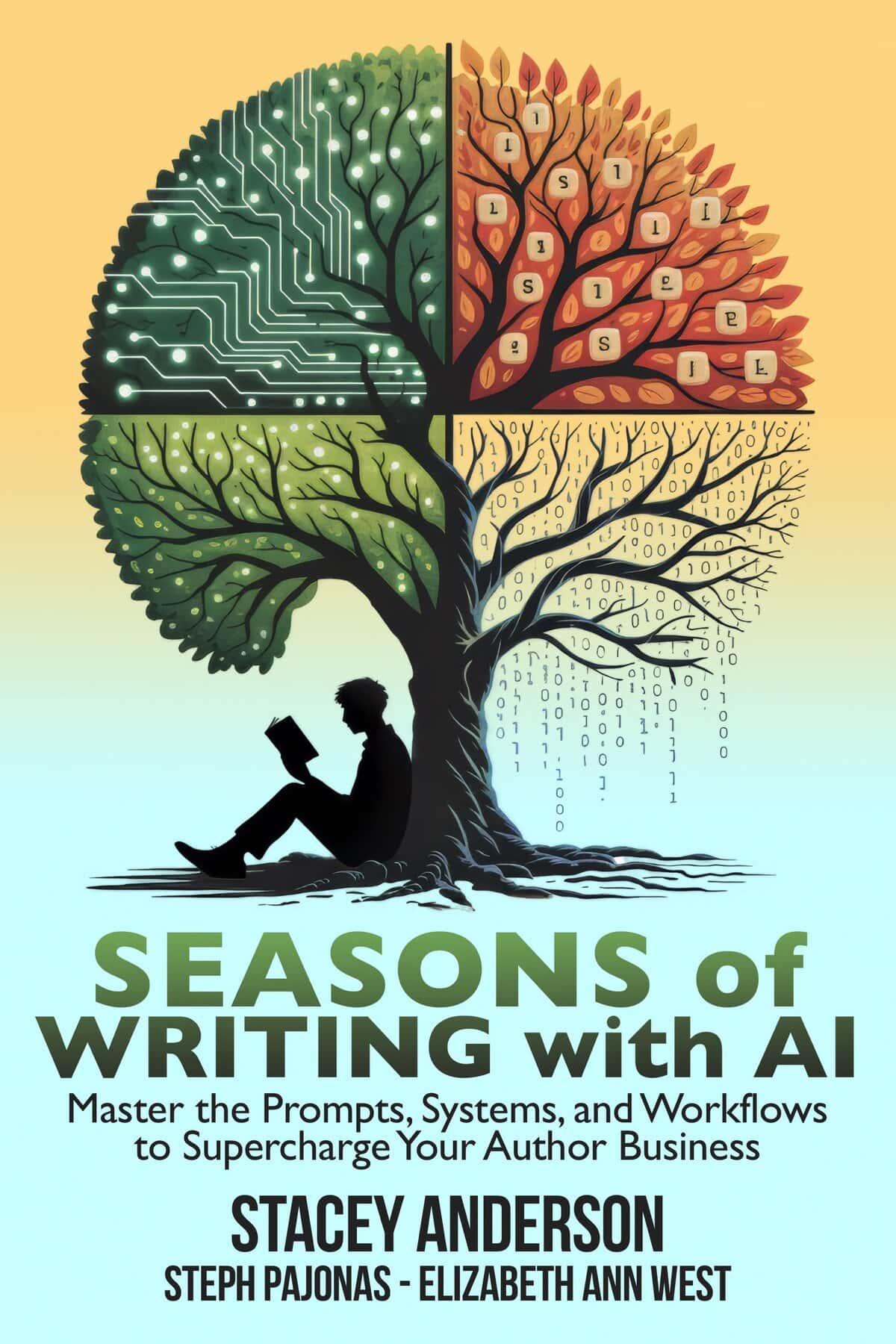
So, you’ve started using AI, but it’s not the magic bullet you hoped for.
The output is generic, the process is clunky, and you’re spending more time fixing text than writing it.
Sound familiar? You’re not alone.
Seasons of Writing with AI is your practical field guide to bridging the gap between AI’s promise and its reality. This isn’t another beginner’s guide or philosophical debate—it’s a collection of battle-tested strategies from 18 months of real-world use by publishing authors who are thriving with AI.
Inside, you’ll discover:
- Your Personal AI Style: Find out if you’re a Gardener, Weaver, Baker, or Architect, and build a workflow that actually works for you
- Advanced Prompting Systems: Master Writing Briefs and Megaprompts to generate consistent, high-quality prose with minimal editing
- How to Speak AI’s Language: Overcome frustrating miscommunications and get the specific results you want, every time
- Beyond the Manuscript: Transform your marketing, create stunning visuals, and even produce audiobooks
Stop wrestling with your AI and start a true creative partnership. Your journey from frustration to mastery begins here.
