AI Basics for Fiction Authors: Unlock the Power of AI in Your Writing Journey – Foreword
I used to be nuanced about AI usage for authors. Almost three years since I published my first book with AI writing in it (December 2021), I no longer worry about nuance. There isn’t time, anymore.
Three years ago, AI wrote a good line or two for me. Today, I can sequence prompts and have 27,000 good words drafted in an hour. An hour. It needs little tweaks to dialogue here and there and a few details changed. That’s it.
Three years ago, AI did what it did. You could change some parameters, make it slightly more unique sounding. Today, with just 10 samples of writing, I can make models indistinguishable to my human writing to my editor and readers. For a cost of less than $1.
This is what I mean, there’s isn’t time anymore for me to worry about how authors feel about AI and be nuanced about the usage.
My litmus test is I use AI for anything and everything that wouldn’t bother me if another author did the same. What do I mean by that?
Would I be bothered if another author took my books and made a fine tune? Yes. It might not be illegal, it might not be something I could stop or even know happened. But I wouldn’t want that done to me, and so I will never fine tune on another author’s words.
Would I use AI to ruin another author’s career? Oh, what? With AI you can mass create all kinds of documents, reviews, social media posts, etc. You could lie, you can make AI video that are fakes. To me, that is fraud and is not an ethical use of AI. I won’t use AI to harm someone else.
But using AI to write, brainstorm, edit, explore, create covers, create marketing, and more? All fair game. And without a single large publisher even pledging not to use it (and I know they already ARE using it), there isn’t anymore time left to wait for indies to learn.
Learn AI. Decide what uses make sense to you. Even if you decide it’s not for you, do so from an informed position of the possibilities. It might be how you find a niche to be where AI can’t go. What’s most likely to happen, though, is learning now will give you the option to adopt later when you feel a need.
Elizabeth Ann West, CEO of Future Fiction Press and Future Fiction Academy
In the world of writing, where words are both our tools and our companions, change can often be met with unease. The emergence of AI in the creative process has sparked a range of emotions among authors — some view it as concerning or even terrifying. Yet, as I reflect on my own journey with AI, I find myself filled with excitement and gratitude for the transformative role it has played in my writing career.
I have always cherished the time spent mulling over stories, allowing them to brew in my mind until they emerged as fully formed narratives. However, life threw me a curveball when I fell ill with COVID-19 in 2022. The months that followed were marked by brain fog and exhaustion, making it nearly impossible to maintain my usual writing pace. My career seemed to hang in the balance. I thought I was done.
It was during this heartbreaking period that I turned to an AI writing tool called Sudowrite. What I discovered was not just a tool but an ally — one that reignited my passion for storytelling and provided support when I needed it most. With AI’s assistance, writing became fun again. The suggestions it offered were rich and inspiring, enhancing my work rather than overshadowing it. I had a blast writing with it.
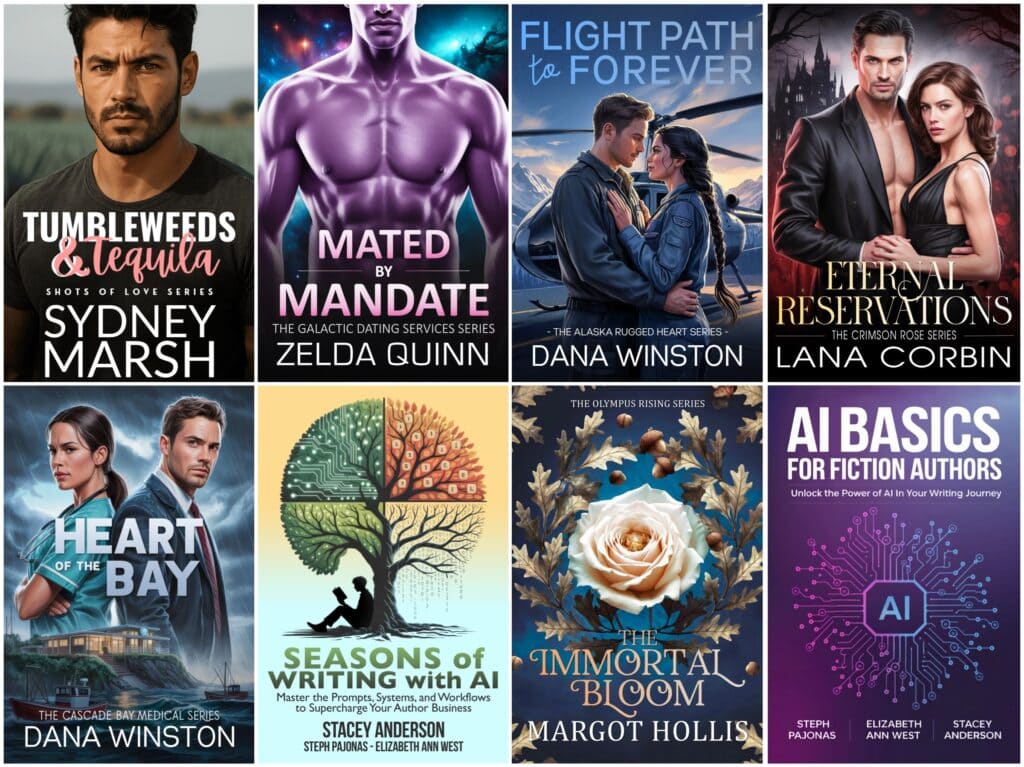
This experience opened my eyes to the potential of AI as an assistive tool for authors facing various challenges — from memory issues to writer’s block. In my Facebook group dedicated to exploring AI tools, I’ve encountered fellow writers who share similar stories of triumph over adversity. Whether dealing with ADHD, fibromyalgia, or simply struggling with certain aspects of writing, these authors have found renewed joy and productivity through AI. And I think that’s something worth celebrating.
AI is not here to replace us but to support us. It enhances our creativity by offering new perspectives and efficiencies, enabling us to focus on what truly matters — our unique voices and visions. As we embark on this exploration of AI Basics for Fiction Writers, let us embrace these tools as partners in our creative endeavors. Let’s have fun!
I am hopeful that this book will serve as a guide and inspiration for authors seeking to harness the power of AI in their own writing journeys. May it help you discover new ways to enrich your storytelling and achieve your creative goals.
Steph Pajonas, Future Fiction Academy and Future Fiction Press
For me, working with AI is a collaborative process. In the past I would use tarot cards or other decks to spark ideas. The trigger was external, the spark was from me.
The same is true with AI. I believe it is splitting hairs to say, ‘This sentence is AI and that paragraph is human.’ It all comes from my spark and how I guide the story.
Humans were born to create. It is part of our DNA. It is the human condition. If you ever doubt it, just read ‘Big Magic’ by Elizabeth Gilbert (then re-read it once a year, just so you don’t forget).
Unfortunately, we’ve taken to qualifying creation and arts as tools have evolved. At one point, you weren’t a ‘real’ photographer if you used Photoshop instead of a darkroom. You weren’t a ‘real’ engineer if you needed a graphing calculator instead of a slide ruler. You’re not a ‘real’ artist or writer if you use AI.
Thoreau was apocryphally credited with saying “Most people lead lives of quiet desperation and die with their songs still inside them.” Using AI as a tool, for the first time it feels like I may not die with my songs still inside me.
Since starting with AI, that creative spark inside me has burned brighter than ever. I’ve reconnected with what made me fall in love with writing. I have the time, energy, and space to take on those wacky side projects that are just fun. Without stressing or tripping over every words, I can fall in love with my characters more deeply.
Most of all, my writing time feels like I’m playing again. I laugh out loud at ideas I come up with the AI. I’m jumping on a zoom call to discuss something exciting with Steph or Elizabeth. I’m rolling out of bed excited to work through a new sequence or puzzle every single morning.
I challenge you to give AI a try. If it doesn’t bring you joy, find what does and follow that. If it is creating funny memes to share with your significant other or creating spreadsheets faster, great too. If it helps make any part of your writing process lighter, use it without reservation.
But I promise you, the only place you won’t find your joy, is in tearing down someone else’s creative joy.
Stacey Anderson, Future Fiction Academy and Future Fiction Press
You have been reading AI Basics for Fiction Authors: Unlock the Power of AI in Your Writing Journey...
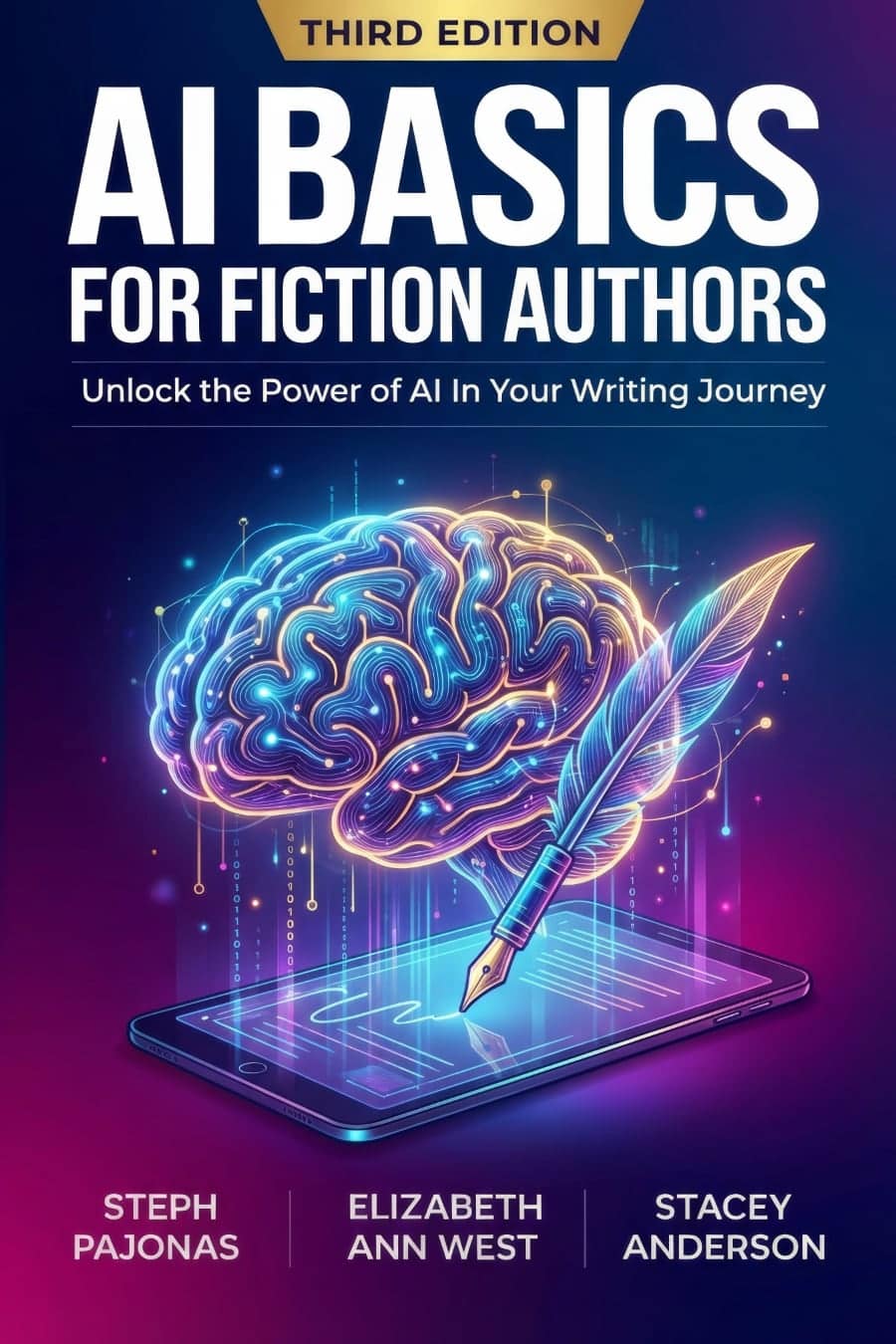
Step into the future of storytelling with AI Basics for Fiction Authors, the ultimate guide to integrating artificial intelligence into your writing process. Whether you’re a seasoned author or just starting out, this book provides the knowledge and tools you need to enhance your creativity, streamline your workflow, and produce high-quality content with ease. Inside, you’ll discover:
- Comprehensive AI Insights: Learn the essentials of large language models, prompt engineering, and context windows to unlock new creative possibilities.
- Customized AI Strategies: Find personalized AI tool plans tailored to your writing style, whether you’re a meticulous plotter or an adventurous pantser.
- Effective Applications: Master the art of writing blurbs, social media posts, and crafting immersive worlds and characters with AI’s assistance.
- Navigating Ethical Terrain: Understand the ethical considerations and content policies that guide responsible AI use, ensuring your work remains authentic and respectful.
- Exploring Unfiltered Models: Access open-source models for generating NSFW content, providing the flexibility to tackle mature themes without limitations.
AI Basics for Fiction Authors is your gateway to a new era of writing, offering practical advice, expert tips, and real-world examples to help you integrate AI seamlessly into your creative process. Embrace the transformative power of AI and take your fiction writing to new heights with this indispensable guide.
