
AI Basics for Fiction Authors: Unlock the Power of AI in Your Writing Journey – Chapter 4
Practical Applications for Fiction Writers
As authors, we wear many hats — not only do we craft compelling stories, but we also manage various aspects of our writing business. From marketing and promotion to world-building and character development, there’s a lot on our plates. Fortunately, AI can be a powerful ally in streamlining these tasks and enhancing our creative process.
In this chapter, we’ll explore three key areas where AI can make a significant impact: Writing Blurbs and Social Media Posts, World-Building and Character Development, and Drafting and Editing. While AI has the potential to assist with many other aspects of our work, focusing on these three areas will provide you with practical, actionable insights that you can start implementing right away.
First, we’ll learn how AI can help you craft engaging blurbs. These are essential tools for marketing your books and connecting with your audience, and AI can help you generate compelling content that captures readers’ attention.
Next, we’ll explore the use of AI in world-building and character development. Creating rich, immersive worlds and multi-dimensional characters is at the heart of great fiction, and AI can provide valuable inspiration and support in these areas.
Finally, we’ll look at how AI can assist with drafting and editing. From generating initial drafts to refining your prose, AI can help you streamline your writing process and produce polished, high-quality content.
By the end of this chapter, you’ll have a clear understanding of how to leverage AI in these key areas, making your writing process more efficient and creatively fulfilling.
Writing Blurbs
Crafting engaging blurbs is a critical aspect of marketing your books, but it’s also an area where many authors struggle. As writers, our passion lies in creating stories and developing characters, not necessarily in promoting our work. The task of distilling a complex narrative into a few compelling sentences or crafting attention-grabbing blurbs can feel daunting and time-consuming.
This is where AI can truly shine. By leveraging AI tools, you can generate captivating blurbs that effectively promote your books and connect with your audience, all while saving time and reducing stress. AI can help you craft concise, persuasive blurbs that highlight the unique elements of your story and entice readers to pick up your book. By harnessing the capabilities of AI, you can focus more on what you love — writing your next great novel — while ensuring that your marketing efforts are effective and professional.
Step-by-Step Guide to Using AI for Creating Compelling Blurbs
Crafting a compelling book blurb can be one of the most challenging aspects of marketing your book. However, with the help of AI, you can streamline this process and generate engaging blurbs that capture the essence of your story.
Here’s a step-by-step guide to using AI for creating compelling blurbs:
Step 1: Find an Example Blurb You Love
Start by finding an example of a blurb that you love. This could be a blurb from one of your own books or a comparable (comp) book in the same genre. The key is to choose a blurb that effectively captures the elements you want to highlight in your own blurb, such as tone, hook, style, and key plot points.
Example: If you’re writing a sci-fi romance, find a blurb from a successful sci-fi romance book that resonates with you and really sells you on the book.
Step 2: Provide the Example Blurb to the AI
Once you have your example blurb, provide it to the AI and ask it to analyze the elements that make the blurb effective. This includes identifying the key components such as the hook, character introduction, conflict, and stakes.
Prompt: “Analyze the following blurb and identify the elements that make it effective: [Insert Example Blurb Here].”
Step 3: Give the AI a Summary of Your Book and Ask the AI to Write 2-3 Drafts of the Blurb
Next, provide the AI with a summary of your book. This summary should include the main plot points, key characters, and the central conflict. The more detailed and specific your summary, the better the AI will be able to craft a blurb that accurately represents your story. Ask the AI to write 2-3 drafts of the book blurb in the same style as the example blurb you provided. This will give you multiple options to choose from and a solid starting point for crafting your final blurb.
Prompt: “Here is a summary of my book: [Insert Book Summary Here]. Please use this information to write a book blurb in the same style and with the elements identified in the example blurb. Write 2-3 drafts of a book blurb for my story.”
Step 4: Review and Edit the Drafts
Review the drafts generated by the AI and identify the elements that work well. You can mix and match parts from different drafts, refine the language, and make any necessary edits to ensure the blurb accurately reflects your story and engages potential readers.
Tip: Look for a strong hook, clear character introduction, compelling conflict, and high stakes. Ensure the blurb captures the tone and style of your book.
Step 5: Finalize Your Blurb
Once you’ve reviewed and edited the drafts, finalize your blurb. This final version should be concise, engaging, and reflective of your book’s unique elements. With the help of AI, you’ll have a polished and compelling blurb ready to entice readers.
By following these steps, you can leverage AI to create compelling blurbs that effectively market your book. This approach not only saves time but also provides you with a strong foundation to craft blurbs that resonate with your audience and highlight the best aspects of your story.
World-Building and Character Development
World-building and character development are at the heart of great fiction. Creating rich, immersive worlds and multi-dimensional characters can captivate readers and bring your stories to life. However, these tasks can also be time-consuming and challenging. Fortunately, AI can be a valuable tool in providing inspiration and support for these important aspects of storytelling.
Generate Unique Settings
AI can help you brainstorm unique and detailed settings for your story. Whether you’re creating a fantastical realm or a futuristic city, AI can provide vivid descriptions and imaginative elements to enrich your world. Remember to be specific in your prompting to get the best results!
Example Prompt: “Describe a bustling marketplace in a futuristic city where advanced technology and ancient traditions coexist.”
Develop Cultural Elements
Incorporating cultural elements such as customs, rituals, and societal structures can add depth to your world. AI can generate ideas for cultural practices, festivals, and social hierarchies that make your setting more immersive.
Example Prompt: “Create a list of five unique cultural practices for a desert-dwelling society that values water conservation and communal living.”
Craft Historical Backgrounds
A well-developed history can provide context and richness to your world. AI can help you create historical events, legends, and influential figures that shape the current state of your setting.
Example Prompt: “Outline the history of a medieval kingdom that rose to power through a series of legendary battles and alliances.”
Design Flora and Fauna
Unique flora and fauna can make your world feel alive and distinct. AI can generate descriptions of plants, animals, and mythical creatures that inhabit your setting.
Example Prompt: “Describe three unique plants and three mythical creatures found in an enchanted forest.”
Creating Detailed Character Profiles
AI can assist in generating detailed character profiles, including physical descriptions, personality traits, and backstories. This can help you create well-rounded and believable characters.
Example Prompt: “Create a detailed character profile for a rebellious teenage girl who discovers she has magical abilities.”
Developing Character Arcs
Understanding how your characters will grow and change throughout your story is essential for compelling narratives. AI can help you outline character arcs, highlighting key moments of transformation and growth.

Example Prompt: “Outline the character arc of a reluctant hero who must overcome self-doubt to lead a rebellion against an oppressive regime.”
Generating Dialogue
Crafting natural and engaging dialogue can be challenging. AI can generate dialogue snippets that capture your characters’ voices and advance the plot.
Example Prompt: “Write a dialogue scene between a wise mentor and their impulsive apprentice, discussing the importance of patience and discipline.”
Exploring Character Relationships
Character relationships add complexity and emotional depth to your story. AI can help you brainstorm interactions and dynamics between characters, from friendships to rivalries.
Example Prompt: “Describe the evolving relationship between two siblings, one of whom is destined to become a ruler while the other struggles with jealousy and ambition.”
By leveraging AI for world-building and character development, you can enrich your stories with imaginative settings and compelling characters. These tools provide valuable inspiration and support, allowing you to focus on weaving intricate narratives that captivate your readers.
Drafting and Editing
When it comes to drafting and editing, every author has their own unique approach and set of preferences. For some, the act of writing the first draft is a sacred part of the creative process—an intimate journey of bringing their story to life. These authors may not want to use AI for drafting, and that’s perfectly okay. You don’t have to use AI for drafting if it doesn’t align with your creative values.
However, many authors find the first draft to be a tedious slog or struggle with sitting at the computer for hours at a time due to physical limitations like a disability. This is where AI can come in handy, helping you stay on track with your writing goals and ensuring you finish your stories. AI can assist in generating initial drafts, providing a starting point that you can then refine and shape according to your vision.
Conversely, there are authors who love the editing process and wouldn’t dream of letting an AI handle that work. For them, editing is where the magic happens—where they polish their prose and elevate their narrative. But there are also authors who despise the editing process. Once they complete the initial draft, they have trouble concentrating on the subsequent drafts or edits. In these cases, AI can be a valuable tool, helping you refine your manuscript and make necessary revisions without the overwhelming burden.
The key is to find the pain points in your writing process and use AI in a way that fits your needs. There’s no one right way or wrong way to use AI. Whether you need help with drafting, editing, or both, AI offers flexible solutions that can enhance your creative process and make your writing journey more enjoyable and productive.
By leveraging AI for the tasks that challenge you the most, you can focus on what you love about writing and ensure that your stories shine.
For Pantsers
Pantsers often write by the “seat of their pants,” letting the story unfold organically without extensive planning. Here are a few tips on how AI can assist pantsers in drafting the next beat of their story:
Generating the Next Beat: When you’re unsure of what happens next, use AI to generate the next beat of your story. Provide a brief summary of the current situation and ask the AI to suggest the next logical step.
Example Prompt: “The protagonist just discovered a hidden door in the library. What happens next?”
Exploring Character Interactions: Use AI to explore interactions between characters. This can help you develop relationships and add depth to your narrative.
Example Prompt: “Write a dialogue scene where the protagonist confronts their best friend about a secret they’ve been keeping.”
Overcoming Writer’s Block: If you’re stuck, let the AI suggest a few different directions for your story. This can spark new ideas and help you move forward.
Example Prompt: “The protagonist is at a crossroads in their journey. Suggest three different paths they could take and the potential consequences of each.”
For Plotters
Plotters meticulously plan their stories, outlining chapters, developing character arcs, and structuring the narrative in detail before they start writing. Here are a few tips on how AI can assist plotters in drafting whole scenes from scene briefs:
Drafting Scenes from Briefs: Use AI to draft entire scenes based on detailed scene briefs. Provide the AI with the key elements of the scene, including setting, characters, and plot points, and let it generate a first draft.
Example Prompt: “Draft a scene where the protagonist meets the antagonist for the first time. The setting is a crowded marketplace, and the protagonist is trying to remain unnoticed while the antagonist is searching for them.”
Expanding Outlines into Full Scenes: Take your detailed outline and use AI to expand it into full scenes. This can save time and help you maintain consistency with your planned structure.
Example Prompt: “Expand the following outline into a full scene: The protagonist sneaks into the enemy’s camp at night to gather information. They overhear a crucial conversation but are almost caught when a guard patrols nearby.”
Refining Character Arcs: Use AI to draft key moments in your characters’ arcs, ensuring that their development aligns with your overall plan.
Example Prompt: “Write a scene where the protagonist realizes they have to take responsibility for their actions. This is a turning point in their character arc, where they decide to confront the antagonist.”
General Tips for Both Pantsers and Plotters
Iterate and Refine: Don’t be afraid to generate multiple drafts of a scene. Use the AI’s output as a starting point and refine it until it aligns with your vision.
Example Prompt: “Generate three different versions of the scene where the protagonist confesses their love to the romantic interest. Each version should have a different tone: one humorous, one serious, and one bittersweet.”
Incorporate Sensory Details: Ask the AI to include sensory details in its drafts to make scenes more immersive and vivid.
Example Prompt: “Write a scene where the protagonist walks through a bustling city. Include sensory details like sights, sounds, and smells to bring the setting to life.”
Maintain Consistency: Use the context window to provide background information and ensure consistency across scenes.
Example Prompt: “The protagonist has a scar on their left hand from a previous battle. Write a scene where they use this scar to convince an ally of their identity.”
By leveraging AI for drafting scenes and chapters, both pantsers and plotters can enhance their writing process, overcome challenges, and bring their stories to life with greater ease and efficiency. Whether you’re generating the next beat of your story or expanding detailed outlines into full scenes, AI offers valuable support to keep you on track and inspired.
You have been reading AI Basics for Fiction Authors: Unlock the Power of AI in Your Writing Journey...
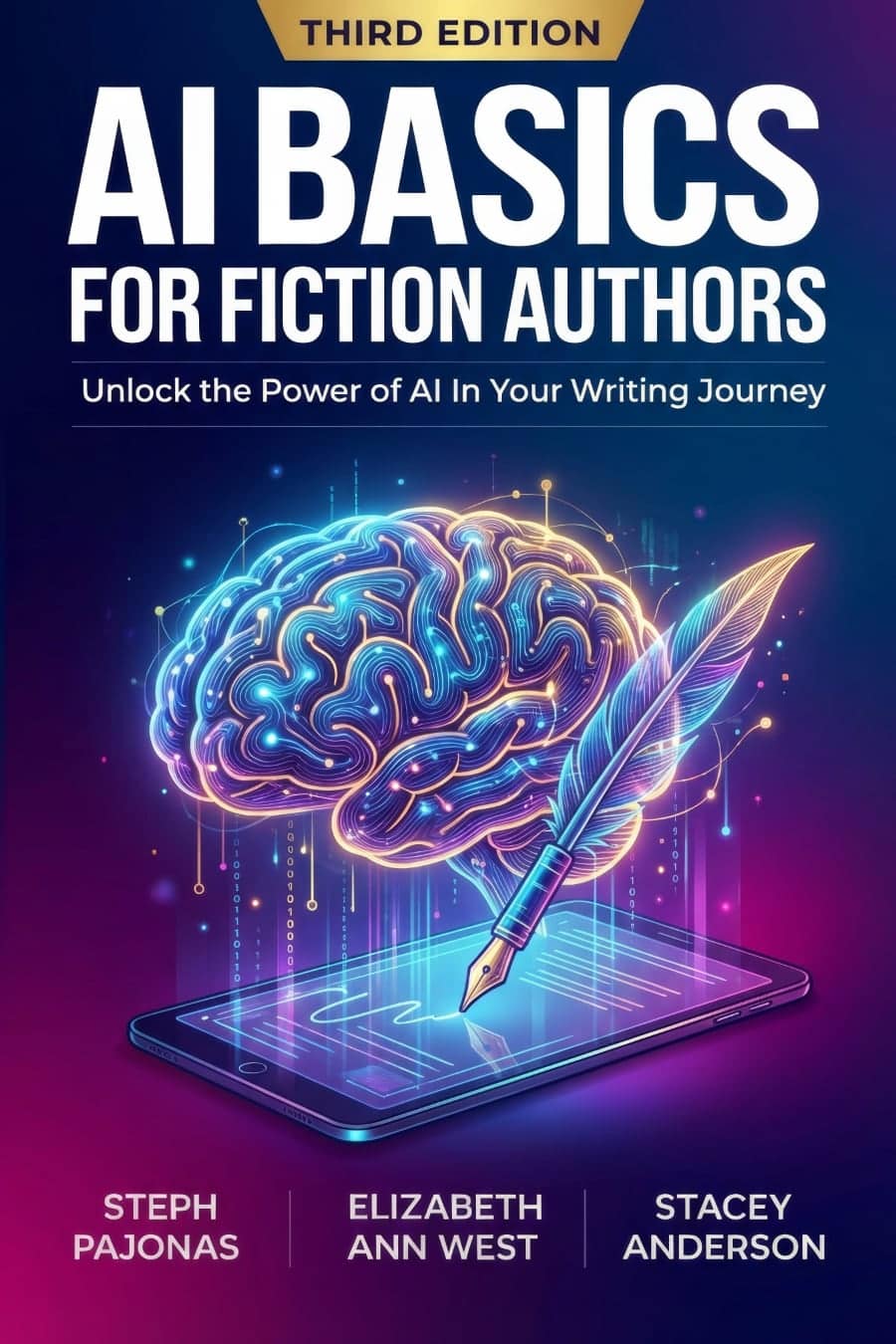
Step into the future of storytelling with AI Basics for Fiction Authors, the ultimate guide to integrating artificial intelligence into your writing process. Whether you’re a seasoned author or just starting out, this book provides the knowledge and tools you need to enhance your creativity, streamline your workflow, and produce high-quality content with ease. Inside, you’ll discover:
- Comprehensive AI Insights: Learn the essentials of large language models, prompt engineering, and context windows to unlock new creative possibilities.
- Customized AI Strategies: Find personalized AI tool plans tailored to your writing style, whether you’re a meticulous plotter or an adventurous pantser.
- Effective Applications: Master the art of writing blurbs, social media posts, and crafting immersive worlds and characters with AI’s assistance.
- Navigating Ethical Terrain: Understand the ethical considerations and content policies that guide responsible AI use, ensuring your work remains authentic and respectful.
- Exploring Unfiltered Models: Access open-source models for generating NSFW content, providing the flexibility to tackle mature themes without limitations.
AI Basics for Fiction Authors is your gateway to a new era of writing, offering practical advice, expert tips, and real-world examples to help you integrate AI seamlessly into your creative process. Embrace the transformative power of AI and take your fiction writing to new heights with this indispensable guide.
More About AI Basics for Fiction Authors: Unlock the Power of AI in Your Writing Journey
